Friday, 29 June 2012

Kenya’s innovative agricultural micro-insurance program for smallholder farmers in Kenya wins award

14 June 2012. London. Kilimo Salama, a partnership between the Syngenta Foundation for Sustainable Agriculture and UAP Insurance, won the Financial Times’ award for Technology in Sustainable Finance, recognizing their groundbreaking work to provide smallholder farmers with access to insurance cover using innovative technology and approaches.

The FT’s Award for Technology in Sustainable Finance recognizes organizations and initiatives that are addressing the scarcity of essential goods and services across society and those that demonstrate leadership and innovation in addressing environmental, social and corporate governance considerations in business.

Kilimo Salama (Kiswahili for ‘safe farming’) is an innovative, pay-as-you-plant, index-based, micro-insurance program for smallholder farmers in Kenya and the first in the world to use a mobile network-based platform and on-the-ground solar weather stations to provide smallholder farmers with low-cost insurance policies.“When it comes to drought, most farmers have no choice but to simply pray for rain. And if the rains don't come, the crops don't grow. At a time of global change, Kilimo Salama is giving farmers more options so they can meet these challenges and prosper,” said Marco Ferroni, Executive Director of the Syngenta Foundation for Sustainable Agriculture


Kilimo Salama has seen an eventful second year marked by severe weather and explosive farmer demand for insurance to mitigate current and future weather risk. Kilimo Salama has just completed one of the largest index insurance payouts ever experienced on the continent has insured nearly 64,000 farmers for the next season. 


They are currently making plans to expand to other countries in the region beginning with Rwanda. 


In Kenya, small-scale farmers are particularly vulnerable to the vagaries of weather, often losing their entire investment when droughts or floods destroy their crops. Crop insurance is usually too costly for such operations. But a Swiss-based foundation is now offering low cost insurance through a program called "Kilimo Salama," or "safe farming." Cathy Majtenyi reports for VOA from the western Kenyan town of Eldoret.


Rose Goslinga, Technical Coordinator of the Agricultural Insurance Initiative, Kilimo Salama, speaks at the Power of Information: New Technologies for Philanthropy and Development conference. This conference was co-hosted by the Indigo Trust, Omidyar Network and Institute for Philanthropy. In this video, Rose talks about her work in the field of crop insurance via mobile phone.

Related:
Preliminary List of Innovative Financing Mechanisms (IFMs) for Agriculture, Food and nutrition

Agricultural Biotechnology Regulation: The opposing world views of slow food versus fast food


April 18, 2012, Iowa, US. Over 110 ag industry leaders, scientists, and experts from around the world attended the Ninth BIGMAP Symposium. The 1 day event, titled "Agricultural Biotechnology Regulation, Trade, and Co-existence" focused on current research and perspectives on the role of regulation in biotechnology and genetically modified agricultural production.

Grant Improving Quality Seed Access in Sub-Saharan Africa

Iowa State University seed scientists are partnering with regional and national organizations in Malawi, Zambia and Nigeria to conduct a pilot study in Africa on enabling better access to improved seed varieties with the help of a new grant from the Bill & Melinda Gates Foundation.

The Seed Policy Enhancement in African Regions (SPEAR) project is funded by a $1.45 million three-year grant. As part of the grant, Iowa State University scientists will work to advance harmonization policies into actionable reality in western and southern Africa. They will improve varietal evaluations and timely releases of candidate seed varieties.Read More

Seed Enterprise Management Instittute

Seed Science Center Director Manjit Misra, AGRA President Namanga Ngongi and Distinguished Fellow David Lambert collaborate on the creation of a seed institute during a visit to AGRA.

ISU Seed Science Center, University of Nairobi Establishing African Seed Institute

Iowa State University seed scientists are working with the University of Nairobi and other groups to increase food security and reduce poverty in sub-Saharan Africa with help from a new $4.49 million grant from the Alliance for a Green Revolution in Africa (AGRA). Read more.


Audios and Powerpoints from the 2012 BIGMAP Symposium "Agricultural Biotechnology Regulation, Trade & Co-existence" are now available

Jack Bobo, Senior Advisor on Biotechnology, Department of State

Import/Export Opportunities and Challenges. The opposing world views of slow food versus fast food\


Saturday, 23 June 2012

G20 Mexico 2012 launched an innovative Fund to Boost Food Security and Farmer Livelihoods

18th May 2012. Mexico City. An innovative initiative that will enhance global food security and improve the livelihoods of developing country farmers through prizes and other market-based incentives was announced by the G20 Leaders. With a results-driven funding model that rewards innovators for tackling some of the biggest problems in food security and agricultural development,


AgResults addresses global challenges in food security and agriculture by generating market-oriented solutions. The initiative aims to achieve significant improvements in the wellbeing of the poor and vulnerable in developing countries with a fund of up to $100 million, to be administered by the World Bank. The governments of Australia, Canada, Italy, the United Kingdom, the United States, as well as the Bill & Melinda Gates Foundation, are supporting this effort.

In the coming years, AgResults will launch a series of pilots that address some of the biggest problems in global food security and agricultural development. The initiative’s portfolio of pilots will represent a diverse mix of agriculture and food security issues, testing different types of pull mechanisms in different regions globally.

Through October 2011, the World Bank has solicited 38 pull mechanism ideas from 24 experts in four Thematic Groups focused on in the areas of (1) Inputs/Increasing Yields, (2) Outputs/Post-harvest Management, (3) Livestock, and (4) Nutrition. An Expert Advisory Group has recommended a number of those ideas for donor funding.
The initial set of pilots, focusing on maize production in Sub-Saharan Africa, include:
  • Incentivizing the adoption of on-farm storage technology for smallholder farmers. The on-farm crop storage pilot will focus on Kenya. The pilot will offer prizes for storage capacity sold and technology innovation in two target regions: the Rift Valley and Eastern provinces of Kenya. The pilot is designed to encourage private sector participants to develop innovations in on-farm crop storage technology, while addressing a range of issues faced by smallholders in accessing appropriate storage solutions.In Eastern Province, the pilot will be designed to catalyse innovation specifically for on-farm crop storage solutions that are resistant to the Larger Grain Borer (LGB) pest, as this region was identified as experiencing the greatest incidence of LGB outbreaks owing to its arid climate.
  • Encouraging innovative distribution of a breakthrough technology to reduce aflatoxin contamination. The aflatoxin control pilot will provide incentives for smallholder farmer adoption of a particularly promising aflatoxin control technology called AflasafeTM. This technology has been shown to reduce aflatoxin contamination. of maize grain by between 80 and 99 per cent in field tests in Nigeria, and the pilot will focus on demonstrating a successful model for increasing smallholder adoption of an aflatoxin biocontrol. The pilot will focus on maize in Nigeria, as the country is the largest producer and consumer of maize on the African continent, and is furthest along in registering AflasafeTM as a biocontrol product. The pilot aims to address persistent barriers to the widespread adoption of biocontrol technology by Nigerian smallholders through a premium per-unit payment for maize that is verified to contain a high prevalence of AflasafeTM (a strong predictor of low aflatoxin levels) at designated maize collection points.
  • Building a market for new vitamin A-enhanced varieties of maize.  The biofortification pilot aims to support the rollout of ProVitamin A (PVA) maize in Zambia by stimulating the grain market for the new hybrid varieties of maize through incentives aimed at industrial millers. While the developer of PVA maize, the non-profit organisation HarvestPlus, already has push-financed programs aimed at introducing new seed varieties into the market and supporting smallholder adoption, the AgResults pilot will aim to stimulate longterm demand for new PVA maize products in mainstream secondary markets.
Additional pilots will be explored in the coming years, potentially including livestock vaccines and fertilizer innovation as well as new ideas related to increasing crop yields, decreasing post-harvest losses, increasing livestock productivity and improving nutrition.

The  Expert Advisory Group  consisted of
  1. Craig Courtney Independent Consultant 
  2. John Hamilton Dodds Founder, Dodds and Associates 
  3. Michele Veeman Professor of Agricultural and Resource Economics in the Department of Rural Economy at the University of Alberta 
  4. Peter B. R. Hazell Professor, Center for Environment, Development & Policy, School of Oriental and African Studies (SOAS) 
  5. Susan Horton Associate Provost, Graduate Studies, and CIGI Chair in Global Health Economics, Balsillie School of International Affairs, University of Waterloo 
  6. Monty Jones Executive Secretary, Forum for Agricultural Research in Africa (FARA) 
  7. Marília Regini Nutti General Manager, EMBRAPA (The Brazilian Agricultural Research Corporation) 
  8. Lindiwe Majele Sibanda CEO, Food, Agriculture and Natural Resources Policy Analysis Network 
  9. Giancarlo Spagnolo Professor of Economics, University of Rome ‘Tor Vergata’ 
  10. David Spielman Senior Research Fellow, International Food Policy Research Institute (IFPRI) 
  11. Elizabeth Jean Woods Chief Scientific Officer, Department of Employment, Economic Development & Innovation, Queensland
Related:

Brics' heads of state, from left, Brazil's President Dilma Rousseff, 
Russia's President Vladimir Putin, India's Prime Minister Manmohan Singh, 
China's President Hu Jintao and President Jacob Zuma at the G-20 Summit in 
Los Cabos, Mexico. South Africa is the only African country 
participating in the meeting of the 20 most powerful leaders.
Under Mexico’s G20 Presidency, Vice Ministers/Deputies of Agriculture from the countries of the G20, and invited countries (the “G20 Agriculture Group”) met in Mexico City with the aim of articulating goals, focusing efforts and establishing sound commitments to address food security challenges under a global perspective.

Extract from the Agriculture Vice Ministers / Deputies Meeting REPORT:

Given the importance of Agricultural Innovation Systems (AIS) and especially R&D activities in each country’s respective production systems, we commit to explore additional ways of enhancing international cooperation for the effective management of R&D activities and agree to: 

Facilitate the exchange of experiences and policy dialogue on AIS at a high level, and as a follow up of the G20 Conference on Agricultural Research for Development, we support :
  1. The Meeting of the GCARD to take place in Uruguay in October 2012. 
  2. Meetings of G20 Agricultural Chief Scientists (MACS) or highlevel agricultural research officials from G20 member countries, other interested countries, and International Research Organizations such as CGIAR, with the goal of identifying global research priorities and targets, facilitating collaboration between public and private sector organizations in the key areas, most likely to drive sustainable productivity gains, and tracking progress on established goals over time. The first MACS meeting will take place in Mexico in September 2012.9/16
  3. Invite existing mechanisms and platforms to consider ways to facilitate international collaboration and information exchange on sustainable agricultural innovation and growth. 
  4. Focusing agricultural R&D cooperation on helping developing countries, particularly those least developed to enhance capacitybuilding and promote agricultural knowledge sharing and transfer. 
  5. In addition, we emphasize the need to strengthen efforts at the national, regional and global levels to assess, identify, prioritize, monitor and evaluate investments in AIS in order to a) collect and maintain a comprehensive database on expenditures on agricultural innovation; and b) develop tools and methods to assess the performance and impact of innovation systems.

Friday, 22 June 2012

The Africa Finance & Investment Forum (AFIF)


17 – 19 June 2012. Rabobank Headquarters – Utrecht, Netherlands. The Africa Finance & Investment Forum (AFIF) 2012, was held in the framework of the UN’s "International Year of Cooperatives”, and organised in partnership with Rabobank Foundation, the Dutch international finance service provider operating on the basis of cooperative principles.


The Africa Finance & Investment Forum is one of EMRC’s showcase events, aimed at strengthening the private sector in Africa, by encouraging partnerships andattracting investments. The Forum is designed for entrepreneurs interested in securing finance for their projects, for private investors looking for projects, as well as for policy makers, financiers and bankers.


AFIF  featured over 250 decision makers from around the world; African Companies and financing institutions; International and bi-lateral organisations; NGOs and foundations working in Africa. The Rabobank Foundation, Centenary Bank, Global Development Cooperative, the World Bank, GIZ (German International Cooperation Organisation), FARA and the Shell Foundation are just a few of the organisations that attended the AFIF this year. Prof Monty Jones of FARA made a presentation on "Strategic partnerships to enhance investments in Africa’s Agricultural Productivity and Competitiveness" during the Session on:  Innovative solutions to address the financial needs of SMEs & Cooperatives.

Related: EMRC Project Incubator Award Session


CESACOPA is the winner of 2012 Incubator Award. CESACOPA is a coffee cooperative located in Amboim province, Angola. The main objective of the CESACOPA project is to increase coffee quality standards for export while at the same time making a clear contribution  to the community e.g., employment generation and pollution abatement. The coffee is produced without use of chemicals or pesticides and the fertilizer used is organic. It is also noted that the project impacts some 6000 families as direct beneficiaries. 
This year’s 2012 Incubator Award was sponsored by Hivos, a leading Dutch organisation and Venture Capital for Africa (VC4A), a global platform connecting entrepreneurs and investors throughout Africa. With two leading organisations associated to this year’s award, the winner and nominees will receive increased international recognition and the opportunity to expand their global contacts. This prestigious award will be presided by a panel of international experts and the winner will receive a cash prize of US$15,000.
The project promoter Anastácio Roque Gonçalves explained, "This project aims to obtain a coffee grader machine and installing a small coffee laboratory to help the export chain and create the proper environment for fair trade and coffee certification". 


Establishment of an African Food and Agricultural Policy Platform


30th – 31st May, 2012. Accra, Ghana. Workshop to Plan the Establishment of an African Food and Agricultural Policy Platform (AFAPP).

The workshop was organized by the Forum for Agricultural Research in Africa (FARA) in collaboration with the Center for International Food and Agricultural Policy (CIFAP) of the University of Minnesota, USA. Policy research institutions or think tanks support and influence public and private sector decisionmaking by conducting policy research, disseminating the results and engaging in advocacy for its use. They also act as catalysts for new thinking and new solutions to address current, emerging and potential future problems and offer a nursery of ideas on the direction policies should take. With its new role as a weaver of knowledge networks in Africa,

FARA will provide a continental forum for networking (catalyzing, connecting and communicating) among African policy research institutions. Affiliate members of AFAPP will be drawn from these and other institutions to constitute the research resources by which AFAPP can carry out its mandate. The platform will provide the opportunity for them to catalyze, connect and communicate thus complementing and adding value to the work of each other. The platform will also provide several venues (e.g. workshops, seminars, training, conferences) for “venting” or communicating research outputs to affiliates of AFAPP, policymakers, and the broader community of policy analysts. By providing a platform for promoting the production, dissemination and uptake of policy research outputs, FARA expects to enhance the contribution of policy research institutions to public policy in Africa.

A small group (15 – 20) of policy experts drawn from policy research and development institutions within and out of Africa with ample knowledge and experience in food, agriculture and natural resources participated in the 2-day workshop. The participants have developed an action plan that shows the objectives, outputs and activities to be implemented. It should also provide a structure and operational mechanism of AFAPP, potential sources of funding and a roadmap on the way forward with identified responsibilities.

Wednesday, 6 June 2012

Africa Human Development Report 2012 on Food security

Launch of the report at the UNON compound in Nairobi.
(Photo: UNDP)
15 May, Nairobi, Kenya. Sub-Saharan Africa cannot sustain its present economic resurgence unless it eliminates the hunger that affects nearly a quarter of its people, the United Nations Development Programme (UNDP) argues in the newly released Africa Human Development Report 2012: Towards a Food Secure Future.

“Impressive GDP growth rates in Africa have not translated into the elimination of hunger and malnutrition. Inclusive growth and people-centred approaches to food security are needed” said UNDP Administrator Helen Clark at the launch on 15/05, attended by Kenya’s President Mwai Kibaki. Arguing that action focused on agriculture alone will not end food insecurity either, the Report calls for new approaches covering multiple sectors; from rural infrastructure to health services, to new forms of social protection and empowering local communities.

Ensuring that the poor and vulnerable have greater voice through strengthened local government and civil society groups is also needed to ensure food security for all. The quickening pace of change and new economic vitality on the continent make this an opportune time for action, the Report says. “Building a food-secure future for all Africans will only be achieved if efforts span the entire development agenda” Helen Clark said. While acknowledging that there are no quick fixes, the report argues that food security can be achieved through immediate action in four critical areas: Increasing agricultural productivity; more effective nutrition; building resilience; empowerment and social justice.

Towards a Food Secure Future

Sub-Saharan Africa has the highest prevalence of hunger in the world. Until this situation improves, the human development prospects of millions of Africans will remain at risk. UNDP’s first Africa Human Development Report shows that food security and human development reinforce each other.

If African countries are to realize their long-term potential, the report says, they must boost agricultural productivity to both improve the availability of food and reduce poverty. Policies to enhance nutrition are central to ensuring that access to food translates into human development. The report argues further that local populations must have the resources and decision-making power to produce and consume nutritious food throughout the year, overcoming the risks represented by continuing conflict, climate change and variations in food prices.

These drivers of change, by ending the ravages of hunger and malnourishment, will nurture capabilities and conditions for human development. A well-nourished and empowered population, in turn, is more likely to seek education, participate in society and expand its productive and human potential. With the right policies and institutions Africa can sustain this virtuous cycle of higher human development and enhanced food security.


Watch the video of the report below, featuring Ethiopian Prime Minister Meles Zenawi, Liberian President Ellen Johnson-Sirleaf, Harvard Professor Calestous Juma, UNDP Administrator Helen Clark and the Director of UNDP Africa, Tegegnework Gettu. All interviews can be watched individually.
 
Africa Human Development Report 2012 from UNDP on Vimeo.

Connecting Farmers to the Agricultural Value Chains in southern Africa

On May 28-30, 2012, SACAU hosted its Annual Conference and AGM in Antananarivo, Madagascar.

The theme of the two-day conference was “Connecting Farmers to the Agricultural Value Chains in southern Africa” and aimed at fostering more structured relations between farmers and agribusinesses in southern Africa. 

CEOs and Presidents of national farmers’ unions from 16 countries in southern Africa attended. Key agribusinesses with a regional scope, such as SENWES, AFGRI, RUSELLSTONE, Massmart/Wal-mart, SAB Miller, Agribusiness Chamber and ABSA were invited to participate as well as regional institutions including SADC’s Trade, Investment, Finance and Industry (TIFI), COMESA and NEPAD. 

Presentations were made by some of the leading agricultural procurement agri-businesses and discussions focused on sharing some of key developments and issues related to value chains in Southern Africa Region.

The conference was aligned to SACAU’s aim to strengthen its relationship with agribusinesses and create an environment that allows farmers to be well informed about value chain issues with respect to trading/marketing, retailing, direct production, storage, financing, processing, input supply and others. Increased agribusiness activity can be a key driver towards the deepening and broadening of the commercialisation of primary production, and especially of the smallholder sector.

Core areas of agreement between farmers and agribusiness from the conference will be used by SACAU to develop its positions on the sustainability of agriculture, especially from the perspective of agriculture primary producers in the region.


Annoucement: e-mail conference from 4 June to 1 July 2012 on "Ensuring the full participation of family farmers in agricultural innovation systems

4 June to 1 July 2012. FAO is hosting a moderated e-mail conference  on "Ensuring the full participation of family farmers in agricultural innovation systems: Key issues and case studies".

The UN General Assembly has declared 2014 to be the International Year of Family Farming and has invited FAO to facilitate implementation of the International Year, in collaboration with its partners. Among its initiatives for the International Year, FAO is planning to publish a major study on family farming and Agricultural innovation systems (AIS) in 2014 in the State of Food and Agriculture series, which is FAO’s major annual flagship publication.

Agricultural innovation systems are systems of individuals, organizations and enterprises that bring new products, processes and forms of organization into social and economic use to achieve food security, economic development and sustainable natural resource management. AIS include a multitude of potential actors, such as producer organizations, research organizations, extension and advisory services, universities and educational bodies, governments and civil society organizations, co-coordinating bodies, individual farmers and farm laborers, and the private sector (including traders, processors, supermarkets etc.).

The e-mail conference is open to everyone, is free and will be moderated.

The Background Document to this FAO e-mail conference is available here.

Meeting the needs of smallholder farming families also provides the central theme of the GCARD RoadMap, which sets out the systematic changes required to transform and strengthen innovation systems to better meet the needs of resource-poor smallholders around the world.  Results from the FAO e-mail consultation will help inform discussion in The Second Global Conference on Agricultural Research for Development (GCARD 2): “Foresight and partnership for innovation and impact on small-holder livelihoods” on practical actions underway and that are required to implement these systematic changes. The GCARD 2 will be organized in Punta del Este, Uruguay, 29 October – 1 November 2012, more information is available on the GFAR website.  The Pre-Registration for the GCARD 2012 Conference is now open.

Outcomes from the email consultation and the GCARD Conference will inform preparation of the major FAO study in 2014, as well as help to build cooperation around key forward-looking agendas and facilitate planning of joint actions among all AIS stakeholders to deliver large scale development outcomes.

Announcement:: e-discussion: The potential of information and communication technologies (ICT) to improve data collection and M&E in agriculture in Africa

Participate in the 3rd e-Forum: June 11-22
The potential of information and communication technologies (ICT) to improve data collection and M&E activities is striking. Mobile phones, new platforms and repositories, and even software for reporting have reduced costs and time, improved data validity, and increased the ease of implementation. Some studies are showing these benefits. 
When a team from Catholic Relief Services used iformbuilder to register and distribute vouchers to beneficiaries in a seed fair in Central African Republic, they saved over a one week prep time and reduced the personnel needed by half. CRS is now developing an entire M&E system using iformbuilder.
The ICT in Agriculture e-Sourcebook touches on these tools in a number of modules. Module 6 on Agriculture Innovation Systems, Module 3 on Mobile Phones, and Module 8 on Farmers Organizations describe how some of these tools have been used. The following videos are taken from only a few of the many digitized data collection and M&E service providers. 

EpiSurveyor, demo of SMS data entry--

FrontlineSMS, explanation of origins and basics--

iformbuilder, basic demo--

This forum will explore two main topics: 
1) Tools and issues in data collection and 
2) Post-data collection—repositories, analytics, and dissemination in monitoring and evaluation. The forum will open the discussion to challenges related to using these technologies and their solutions as well.

Thursday, 24 May 2012

e-Agriculture for Improved Livelihoods and Food Security in Africa.

21st - 23rd May 2012. Johannesburg, South Africa. International Association of Agricultural Information Specialists. 3rd IAALD Africa Chapter Conference: e-Agriculture for Improved Livelihoods and Food Security in Africa.

The conference drew attendance from 90 professionals and experts involved in the application of information and communication technology (ICT) in the rural domain, with a primary focus on agriculture (e-Agriculture), from both inside and outside Africa.

Speakers included government policy makers, industry, international development community, rural development practitioners, as well as researchers and graduate students from the agricultural and rural development field, including ICT. They presented and discussed the latest topics in e-agriculture and shared their experiences and lessons learned in the implementation of e-agriculture initiatives.

The conference activities comprised an exhibition showcasing e-agriculture initiatives and activities; pre-conference workshops, seminars and training. Prior to the conference, an online global discussion was held on e-Agriculture in Africa.

The Role of South-South Cooperation in Agricultural Development in Africa


17 May 2012. Brasília. The Role of South-South Cooperation in Agricultural Development in Africa: Opportunities and Challenges 2012

Both China and Brazil are becoming increasingly important players in agricultural development in Africa, whether through technical assistance or trade and commercial investments in land and agriculture. In the longer term, these new players may reshape the way agricultural development is thought about, financed and implemented across Africa. 


The implications of these new patterns of South-South cooperation have been discussed at a meeting in Brasilia on 17/05 organised by the Future Agricultures Consortium in collaboration with the International Policy Centre for Inclusive Growth (IPC-IG) and the UK Department for International Development (DFID), with support from Articulação Sul, the International Cooperation Centre in Agronomic Research for Development (CIRAD), and the United Nations Entity for Gender Equality and the Empowerment of Women (UN Women).


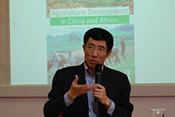
Professor Li Xiaoyun and Professor Qi Gubo of the Chinese Agricultural University in Beijing offered their perspectives based on the findings of their recently-published book, Agricultural Development in China: A Comparative Analysis
Focusing on China's experience of supporting agricultural development in Africa, they argued that China has made massive strides in achieving food security and poverty reduction, feeding 20 per cent of the world's population with only 8 per cent of the world's arable land. Lessons from this experience are potentially important for Africa, they said. China has experience of labour intensive agriculture supported by locally developed appropriate technologies. China's 'green revolution', they pointed out, was home-grown and based on long-term public investment in research, agricultural education and infrastructure, and was not reliant on market led development.
Panel 1: Brazilian cooperation for development: new paradigm for agricultural development in Africa? 

Setting Brazilian agricultural development cooperation in its geopolitical and policy context – what are the attributes of the Brazilian model and what challenges is it facing? Reflecting on lessons from different agricultural development models in Brazil and their implications for cooperation with Africa – how to get the blend right?

Panel 2: Agriculture, climate change and a green economy in Africa: what role for South-South?

Focusing on the opportunities and challenges for African agriculture [in the context of the Rio+20 and post-Durban agendas on sustainability], inclusive green growth and climate change mitigation – climate smart agriculture and the socioenvironmental lesson-learning process from Brazilian agricultural development. What lessons exist from including rural women for example? How can we do better rather than simply produce more?

Panel 3: Brazil and China in Africa: similarities and differences in South-South exchange 

Identifying contrasts and commonalities in Brazilian and Chinese approaches for agricultural development cooperation with Africa, and potential for future exchange – what might Brazil and China do together?


Rwanda's remarkable progress in almost all FARA’s priority areas of intervention

21-23 May. Kigali, Rwanda. The Executive Board of the Forum for Agricultural Research in Africa (FARA) was to review the programs and plans of FARA over the 18-month period from July 2012 to December 2013. The main reason for choosing Rwanda as venue for the Board meeting is the country’s remarkable progress in almost all FARA’s priority areas of intervention such as advocacy and policy, improved access to knowledge and technologies, strengthened capacities, and partnerships and strategic alliances. The total investment is USD 700,000 per annum for the past 3 years. FARA has also trained seven postgraduate students who have already complemented their courses of study and returned to their assignments with RAB.

In order to find out first-hand how Rwandan farmers are benefiting through the interventions introduced by FARA and supported by various donors, the Board members visited two key field locations of the Rwanda Agriculture Board (RAB) in Rulindo and Musanze districts.

In Rulindo, the Board visited the Kotemu Cooperative, where farmers have achieved new prosperity through cultivation of Orange-flesh Sweet Potato (OFSP), which was introduced by the FARA project Dissemination of New Agricultural Technologies in Africa (DONATA).
The members of the cooperative, most of whom are women, were dressed in bright orange shirts bearing the slogan Turye ibijumba bikungahaye kuri Vitamine A! (Let’s eat sweet potatoes rich in Vitamin A!). The women prepared an array of baked OFSP products. One, which they called ‘DONATA Doughnuts’, so impressed Dr Tiemoko Yo, Chairman of the FARA Board, that he exclaimed ‘This is the best cake I have ever eaten!’

At the Musanze site in the village of Gataraga, Irish potato farmers were similarly expressive about FARA’s work through the Sub-Saharan Africa Challenge Program (SSA CP). When Professor Monty Jones, Executive Director of FARA, asked the farmers what specific improvements in their lives had come about as a result of the FARA initiatives, he was overwhelmed by the immediate and varied responses of the farmers. One had been able to build a new house that he rents to a tenant. Another had been able to place her children in school, including one in university. Yet another had purchased a motor vehicle for transporting her crop to market. One after another, the farmers demonstrated their enthusiasm and satisfaction with the SSA CP project.

Thursday, 10 May 2012

Announcement: POSTHARVEST AFRICA 2012: 25 - 28 November, 2012


7th International CIGR Technical Symposium
"Innovating the food value chain"
incorporating
2nd International Conference on Postharvest Technology &
Quality Management

"POSTHARVEST AFRICA 2012"

Conference Flyers:First
Second

Invitation!

Following the success and scientific reputation of the previous CIGR Section VI Postharvest Symposia held in Beijing (China), Warsaw (Poland), Napoli (Italy), Iguascu (Brazil), Potsdam (Germany) and Nantes (France), and the 1st International Conference on Postharvest Technology held in Muscat (Oman), we are pleased to invite you and your colleagues to the next event to be held in the beautiful and historical 'Oak City' of Stellenbosch, South Africa.
The Conference will highlight recent scientific advances and technological tools to handle, preserve, process, maintain and control quality and reduce losses in fresh and processed foods and agro-industrial raw materials, including fruit and vegetables, grains, roots and tuber, meat, seafood, herbs, spices, and cut flowers.
Convenor
Convenor - Prof OparaProf Linus Opara
South African Research Chair in Postharvest Technology
Faculty of AgriSciences, University of Stellenbosch
Private Bag X1, Stellenbosch 7602, South Africa.
Phone: +27 218084064 Fax: +27 218083743
Email: opara@sun.ac.za

Programme DONATA : diffusion des nouvelles technologies agricoles en Afrique

La technique de multiplication rapide des boutures de manioc par recépage à Dabou en Côte d’Ivoire fait école en Afrique. Conçu par le FARA, le Forum pour la Recherche Agricole en Afrique, le CORAF-WICARD et financé par la BAD, la Banque Africaine de Développement, le programme DONATA est un projet dont le but est d’améliorer la productivité agricole en Afrique.

Dans le cadre d’un atelier chercheurs-médias organisé par le FARA/CTA, du 19 au 23 mars à Abidjan (Côte d’Ivoire), une trentaine de chercheurs et journaliste francophones de l’Afrique de l’Ouest et du Centre étaient sur les traces de ce projet exécuté à Dabou. Sur le site du village de petit Badien, la recherche agricole ivoirienne, les services de vulgarisation expérimentent la production de deux nouvelles variétés de manioc à haut rendement : Boucou I et Boucou II à partir de la nouvelle technique de multiplication rapide des boutures de manioc par recépage. Une technique de production de manioc qui suscite beaucoup de convoitises et fait de DONATA un projet de recherche agricole à succès en Côte d’Ivoire.

Le reportage de Ernest KAMBIRE RTB/Télévision

Second African Organic Conference

UNCTAD's Deputy Secretary-General, Mr. Petko Draganov,
together with the 
H.E. Mr. Emmanuel Chenda,
Zambian Minister of Agriculture and Livestock,
and representatives of IFOAM, the African Union and the FAO,
the first President of Zambia, 
Dr. Kenneth Kaunda,
a fervent supporter of organic agriculture, 
participated 
in the opening session of the conference.
2-4 May 2012. Lusaka, Zambia. The Second African Organic Conference concluded with the adoption of The Lusaka Declaration on Mainstreaming Organic Agriculture into the African Development Agenda, which urges the African Union (AU), including the Comprehensive African Agriculture Development Programme (CAADP), to implement the African Organic Action Plan.

The Conference aimed to showcase the role of organic agriculture in ensuring food security and poverty alleviation. More than 300 participants from 40 countries are in attendance. The Conference was held under the theme "Mainstreaming organic agriculture into the African development agenda," with support from the UN Conference on Trade and Development (UNCTAD). The conference stressed that shifting agriculture towards organic practices leads to farming methodologies that rely on local resources, thus shielding farmers from external price shocks as well as encouraging local job creation and preserving arable farm land.

 [The Lusaka Declaration on Mainstreaming Organic Agriculture into the African Development Agenda] [UN Press Release] [2nd African Organic Conference Website]

8th CAADP Partnership Platform (PP) Meeting

3rd and 4th of May 2012. Nairobi Kenya. The African Union Commission (AUC) and NEPAD Planning and Coordinating Agency (NPCA) organised the 8th CAADP Partnership Platform (PP) Meeting around the theme of the meeting “Accelerating CAADP Implementation for results and impact.”

Over 200 participants, including agriculture experts, researchers, policy makers, civil society, development partners, farmers' groups and media from within Africa and beyond attended the two-day event.

The President of Pan African Farmers Organization (PAFO), Ms. Elizabeth Atangana, urged CAADP to put in place the mechanism for marketing Africa agriculture produce. She said the programme should also encourage agricultural research, promote inter-countries trade, strengthen cooperative societies, and empower women and youths in African rural areas. 

“CAADP is an opportunity but the slow implementation of its agenda is of concern to farmers. In Central Africa, the launch of CAADP is still facing a lot of challenges. I hope that this meeting will give us space and lead to conclusion, implementation and joining of countries that have not joined,” she said.

Background: CAADP was established in 2003 as part of the AU's NEPAD programme and as Africa's response to the various challenges facing agriculture in the continent. Some of its main goals are to influence countries to increase their budgetary allocation to agriculture by 10%, achieve 6% growth, promote land and water management, agricultural research, marketing and food security. Some 30 countries have signed the CAADP compact, which is a blueprint for accelerating agricultural growth, while over 24 countries have established agriculture and food security investment plans.

Saturday, 28 April 2012

Farmer training videos have been produced in two more languages, Hausa and Zarma (Niger)


During a workshop in Niamey from 11 till 17 March 2012, ICRISAT has supported the translation of ten videos on Integrated Striga and Soil Fertility Management for sorghum and millet into two more languages, namely Hausa and Zarma. 

The workshop involved local radio broadcasters, researchers and representatives of farmer organizations. The video and audio files are downloadable from the Access Agriculture website. In the coming months, guidelines to support local language translations will be made available on the site.

Friday, 27 April 2012

IFPRI 2011 Global Food Policy Report

23 April 2012. The 2011 Global Food Policy Report, a new flagship publication recently launched by the International Food Policy Research Institute, presents a broad picture of the year’s food policy issues as well as areas that require future attention.

Based on rigorous research, the Global Food Policy Report is designed specifically to provide an overview of 2011 and an outlook for 2012 for non-technical audiences. For the international community, the 2011 Global Food Policy Report makes a number of specific recommendations:

  • The G20 should do more to reduce competition between biofuel and food production and discourage trade restrictions that exacerbate price swings. 
  • The international community should consolidate global and regional agricultural growth strategies and create or strengthen the institutions needed to make these strategies work. 
  • Rio+20 conference participants should integrate economic, social, and environmental sustainability in their discussions and commit to concrete action on long-term development challenges, including poor nutrition, degraded soils, and scarce water. 
  • A broad intersectoral coalition should work together to address nutrition, food, and health issues.

Friday, 20 April 2012

Second Annual Ministerial Dialogue on Integrating Research, Extension and Education in the CAADP Country Process for Increased Agricultural Productivity in Africa

18-19 April 2012. FARA Secretariat, Accra, Ghana.

The purpose of the dialogue was to provide a platform for Ministers of Agriculture; Science &; Technology; Education; and other agriculture-related Ministries to examine the topical issues relating to integrating research, extension and education into the CAADP country process for increased agricultural productivity in Africa.

Participants at the 2nd Annual Dialogue included: representatives of the Governments of Algeria, Angola, Burkina Faso, Burundi, Central African Republic, Chad, Côte d’Ivoire, Democratic Republic of Congo, Ethiopia, the Gambia, Ghana, Guinea, Liberia, Mali, Niger, Nigeria, Senegal, Sierra Leone, South Africa, Sudan, Swaziland, Togo, Uganda and Zimbabwe.

Also in attendance were the African Union/NEPAD, the ECOWAS Parliament, the East African Legislative Assembly (EALA), ECOBank, Technical Centre for Agricultural and Rural Cooperation ACP/EU (CTA), Food and Agriculture Organization of the United Nations (FAO), Kuffuor Foundation, the First Bank International, the African Forum for Agricultural Advisory Services (AFAAS), Tertiary Education for Agriculture Mechanism (TEAM Africa) and the Forum for Agricultural Research in Africa (FARA).

The specific objectives were to:
  • Identify issues of strategic importance to integrating research, extension and education in the CAADP country process, stimulate dialogue on them. 
  • Identify how to develop strategies for integrating research, extension and education in the CAADP country process. 
  • Raise awareness among Ministers and parliamentarians of the need for increased investments in research, extension and education. 
See: ommuniqué

Presentations:
  1. Enhancing agricultural development in Africa. Key note address by Pro. Monty P. Jones (FARA) 
  2. Integrating research, extension and education in the CAADP country process for increased agricultural productivity. (Ms. Idowu Ejere- FARA)
  3. Contribution of pillar IV to the CAADP country process. (Dr. Emmanuel Tambi- FARA)
  4. CAADP country process. (Dr. Marcel Nwalozie- AU-NPCA) 
  5. Innovation systems for enhancing the value of research, extension and education. (Dr. Adewale Adekunle- FARA) 
  6. Funding of agricultural research, extension and education: private sector perspectives. (Mr. Dauda Lawal- First Bank International) 
  7. Developing capacities for improving agricultural productivity. (Dr. Irene Annor-Frempong- FARA) Improving agricultural productivity through direct access to knowledge resources. (Dr. Stephen Rudgard- FAO)
  8. CAADP Pillar IV strategy and operational plan. (Dr. Emmanuel Tambi - FARA) 
  9. Agricultural Advisory Services (AAS) strategy and operational plan. (Dr. Silim Nahdy - AFAAS) Tertiary Agricultural Education (TAE) mechanism. (Prof. Hamidou Boly - TEAM Africa) 
  10. Systems for knowledge management. (Mrs. Myra Wopereis - FARA) 
  11. Emerging and cross-cutting issues affecting agriculture in Africa. (Dr. Ramadjita Tabo - FARA)

Thursday, 19 April 2012

Pilot for protecting against counterfeit crop protection products


Anecdotal evidence collected across all agribusiness sectors in 12 countries in Sub-Saharan Africa indicates that counterfeit agricultural inputs account for more than 30 percent of all retail agro-input purchases. 
Unscrupulous entrepreneurs produce counterfeit pesticide packaging and fill it with inert product, sell inferior grain as quality seed and palm gravel off as fertilizer.  Neither law enforcement agencies nor Ministries of Agriculture nor the private sector have been able to make any real headway in reducing this illegal trading which, according to Felix Jumbe, Executive Director of the Seed Trade Association of Malawi, “makes the poor poorer.”
Felix Jumbe
With support from the U.S. Agency for International Development (USAID) through theCommon Market for Eastern and Southern Africa (COMESA), IFDC is helping eliminate counterfeit crop protection products (CPPs). IFDC staff members have designed a simple counter-measure and, in partnership with CropLife Africa Middle East (CLAME) and CropLife Uganda, IFDC is launching a pilot program to scientifically test the effectiveness of the methodology. CLAME, a member of CropLife International, is a regional federation representing the plant science industry and a network of national associations in 30 countries in Africa and the Middle East. Read more