Showing posts with label CTA. Show all posts

Friday, 20 April 2012

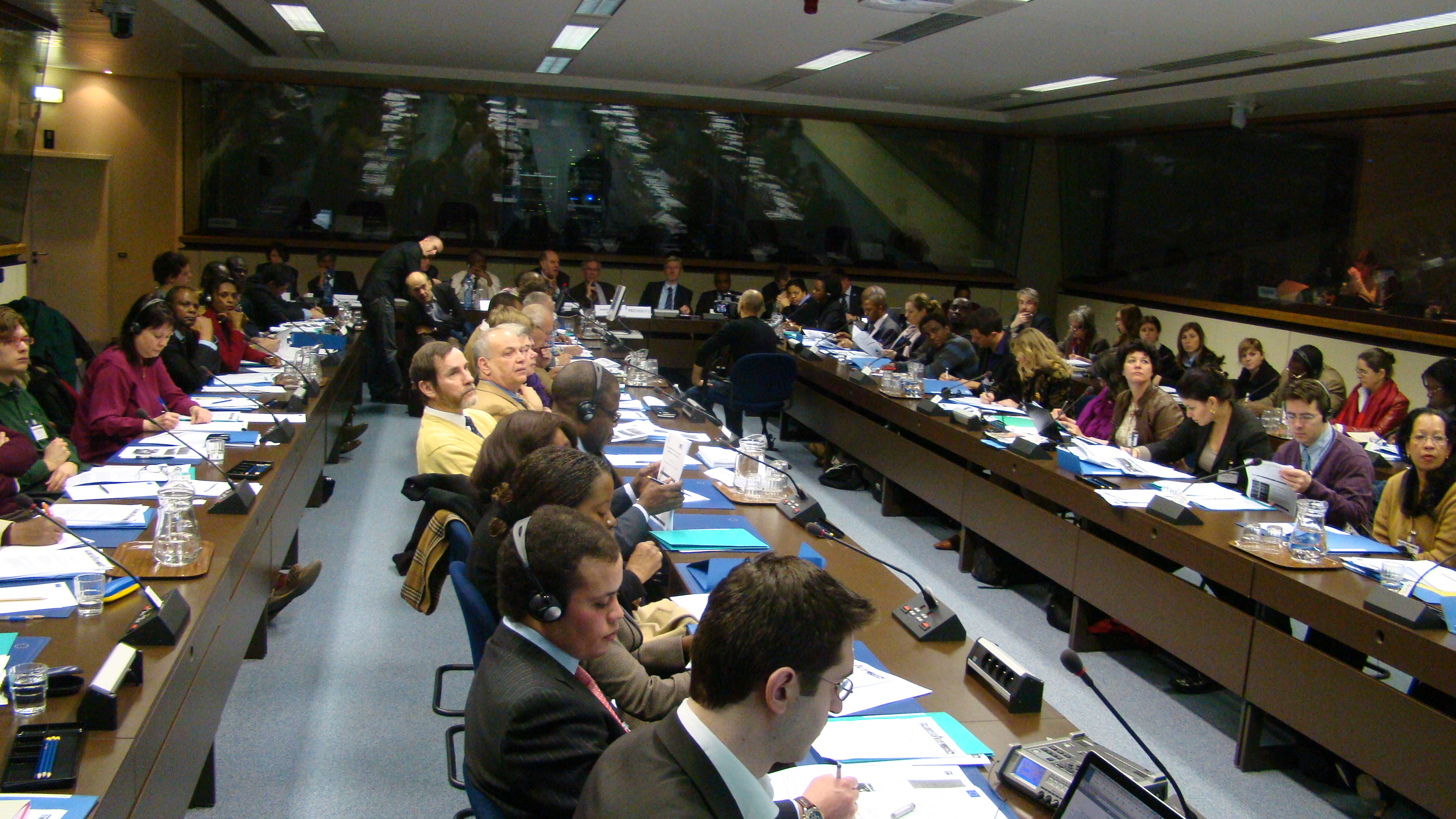
Second Annual Ministerial Dialogue on Integrating Research, Extension and Education in the CAADP Country Process for Increased Agricultural Productivity in Africa

18-19 April 2012. FARA Secretariat, Accra, Ghana.

The purpose of the dialogue was to provide a platform for Ministers of Agriculture; Science &; Technology; Education; and other agriculture-related Ministries to examine the topical issues relating to integrating research, extension and education into the CAADP country process for increased agricultural productivity in Africa.

Participants at the 2nd Annual Dialogue included: representatives of the Governments of Algeria, Angola, Burkina Faso, Burundi, Central African Republic, Chad, Côte d’Ivoire, Democratic Republic of Congo, Ethiopia, the Gambia, Ghana, Guinea, Liberia, Mali, Niger, Nigeria, Senegal, Sierra Leone, South Africa, Sudan, Swaziland, Togo, Uganda and Zimbabwe.

Also in attendance were the African Union/NEPAD, the ECOWAS Parliament, the East African Legislative Assembly (EALA), ECOBank, Technical Centre for Agricultural and Rural Cooperation ACP/EU (CTA), Food and Agriculture Organization of the United Nations (FAO), Kuffuor Foundation, the First Bank International, the African Forum for Agricultural Advisory Services (AFAAS), Tertiary Education for Agriculture Mechanism (TEAM Africa) and the Forum for Agricultural Research in Africa (FARA).

The specific objectives were to:
  • Identify issues of strategic importance to integrating research, extension and education in the CAADP country process, stimulate dialogue on them. 
  • Identify how to develop strategies for integrating research, extension and education in the CAADP country process. 
  • Raise awareness among Ministers and parliamentarians of the need for increased investments in research, extension and education. 
See: ommuniqué

Presentations:
  1. Enhancing agricultural development in Africa. Key note address by Pro. Monty P. Jones (FARA) 
  2. Integrating research, extension and education in the CAADP country process for increased agricultural productivity. (Ms. Idowu Ejere- FARA)
  3. Contribution of pillar IV to the CAADP country process. (Dr. Emmanuel Tambi- FARA)
  4. CAADP country process. (Dr. Marcel Nwalozie- AU-NPCA) 
  5. Innovation systems for enhancing the value of research, extension and education. (Dr. Adewale Adekunle- FARA) 
  6. Funding of agricultural research, extension and education: private sector perspectives. (Mr. Dauda Lawal- First Bank International) 
  7. Developing capacities for improving agricultural productivity. (Dr. Irene Annor-Frempong- FARA) Improving agricultural productivity through direct access to knowledge resources. (Dr. Stephen Rudgard- FAO)
  8. CAADP Pillar IV strategy and operational plan. (Dr. Emmanuel Tambi - FARA) 
  9. Agricultural Advisory Services (AAS) strategy and operational plan. (Dr. Silim Nahdy - AFAAS) Tertiary Agricultural Education (TAE) mechanism. (Prof. Hamidou Boly - TEAM Africa) 
  10. Systems for knowledge management. (Mrs. Myra Wopereis - FARA) 
  11. Emerging and cross-cutting issues affecting agriculture in Africa. (Dr. Ramadjita Tabo - FARA)

Friday, 23 December 2011

Boosting Agricultural Higher education into CAADP

28th to 30th November 2011. Ouagadougou, Burkina Faso. The African Network for Agriculture, Agroforestry and Natural Resource Education (ANAFE), ACP-EU Technical Centre for Agricultural and Rural Development Cooperation (CTA), Forum for Agricultural Research in Africa (FARA), the NEPAD Coordinating Agency, CORAF-WECARD and the Regional Universities Forum for Capacity Building in Agriculture (RUFORUM) held a Sensitization workshop for Engaging French Speaking African Higher Agricultural Education Institutions into CAADP.

Other key partners of the organization are the University of Ouagadougou, University of Abomey Calavi (Benin), the Association of African Universities (AAU), the African and Malagasy Council for Higher Education (CAMES), the Conference of rectors of Universities of Francophone West Africa, Central and Indian Ocean (CRUFAOCI), the Network of Institutions of higher Education in
Fishing (Afri-FishNet), the European Alliance on Agricultural Knowledge for development (Agrinatura) and the French consortium Agreenium.

During the three days conference, a number of papers were presented, followed by debates and discussions, and propositions made. This led to the following results:
  • An increased awareness about the objectives, the constants and the expected outputs of the CAADP;
  • A better understanding of the role to be played by Universities and other agricultural higher education institutions in cooperation with their supervisory ministries and those in charge of agriculture;
  • The massive presence at the meeting of Universities, other higher education institutions and technical and financial partners, is a testimony of their willingness to be involved in actions undertaken for the attainment of the CAADP objectives;
  • Important activities were formulated which will lead to a stronger involvement of agricultural training institutions;
  • Concertation frameworks were proposed with CAADP, ANAFE, RUFORUM and FARA which will be able to serve for interaction between Universities and Agricultural training institutions.
Resources:

Monday, 21 November 2011

Innovations in Extension and Advisory Services

15-18 November 2011, Nairobi, Kenya. Over 400 academics, researchers, extension agents, farmers´ representatives, media experts, policy makers and representatives from international organizations and donors met in Nairobi to discuss innovations in extension and advisory services for food and livelihoods.

The Technical Centre for Agricultural and Rural Cooperation ACP-EU (CTA), the Forum for Agricultural Research in Africa (FARA), the Global Forum for Rural Advisory Services (GFRAS), the International Fund for Agricultural Development (IFAD), the Food and Agricultural Organization (FAO), the Alliance for a Green Revolution in Africa (AGRA), the African Forum for Agricultural Advisory Services (AFAAS), the New Partnership for Africa’s Development Planning and Coordinating Agency (NEPAD Agency), the International Centre for development oriented Research in Agriculture (ICRA) and the World Agroforestry Centre (ICRAF) in collaboration with several national, regional and international partners including the African Network for Agriculture, Agroforestry and Natural Resources Education (ANAFE), Biovision, the Kenya Agricultural Research Institute (KARI), the Ministry of Agriculture – Kenya, the European Initiative on Agricultural Research for Development (EIARD), the University of Nairobi, the University of the West Indies (UWI) and the University of the South Pacific (USP) organised this an international conference to take stock of current policies, thinking and practice, successes and failures of ongoing and past reforms in extension and advisory services and build a coalition moving forward to specifically address meeting the future needs of small-holder farmers, marginalized communities, women and youth in a sustainable and cost effective manner. This conference integrated the GFRAS 2nd annual conference.

“With the global population approaching nine billion by 2050, we need widespread adoption of farming practices that can sustainably increase yields in a changing climate to feed more people, while also creating new job and market opportunities to address high unemployment and poverty,” Michael Hailu, executive director of the Netherlands-based Technical Centre for Agricultural and Rural Cooperation, was quoted as saying in a statement by the organisation, which organised the conference.
“Smallholder farmers - particularly women - produce the bulk of food in developing countries, often under difficult circumstances,” he added. “National governments and international donors must redouble their efforts to boost smallholder agricultural production if we are to reverse persistent food insecurity and rural poverty.”
Some relevant presentations on multi-stakeholder consortia on ARD:

Farmer-managed innovation funds drive multi-stakeholder learning processes.
Ann Waters-Bayer is an agricultural sociologist with ETC AgriCulture in Leusden, Netherlands. She specialises in social and institutional aspects of research and development, especially innovation processes that enhance local capacities to adapt to change.

She is also team member in two European Community-funded projects: JOLISAA (Joint Learning in Innovation Systems in African Agriculture), which operates in Benin, Kenya and South Africa; and INSARD (Including Smallholders in Agricultural Research for Development), which involves NGOs and farmer organisations in Africa and Europe. She has (co-)authored several books and articles on pastoralist development and on innovation processes involving smallholders in Africa.

Empowering smallholder farmers in markets: experiences in collaborative research with national farmer organisations to improve pro-active advocacy for smallholder market access.
by Giel Ton, LEI Wageningen UR, Agrinatura

Extension, advisory services and capability building along the value chain: Do partnerships between farmers and exporters lead to learning and innovation?
Maurice Bolo, African Technology Policy Studies Network (ATPS)
 

Tuesday, 24 May 2011

Announcement: Second Global Share related to agriculture, food security, price volatility, climate change, etc.


26 – 29 September 2011. Rome, IFAD Headquarters. The Second Global Share Fair will provide a forum for participants to learn and share their knowledge, experience and innovations on emerging trends relating to agriculture, food security, price volatility, climate change, changing demographics, and other rural development related issues.

Building on the success of the first global knowledge Share Fair, Bioversity International, the Food and Agriculture Organization of the United Nations (FAO), the International Fund for Agricultural Development (IFAD) and the World Food Programme (WFP) in partnership with CGIAR, CTA, and SDC are jointly organizing the Second Global Share Fair. Download the Concept Note.

Monday, 11 April 2011

3rd European Forum on Rural Development


29th March-1st April 2011. The 3rd European Forum on Rural Development was held in Palencia, Spain. This forum was an initiative by the European Commission and EU Presidency with the support of France, Germany, Ireland, the Global Donor Platform for Rural Development and CTA. Around 500 experts in rural development form all around the world attended.

The Global Donor Platform is an alliance of 34 donor institutions, including agencies in France, Spain, Sweden, Belgium, Germany the European Commission, the World Bank and others. Each agency has a so-called “Focal Point”, a contact who mediates between his own agency and coordinating organs in the Global Donor Platform

Six breakout session (download their programmes here) focussed on:
  1. Institutions and policies for effective governance of rural development
  2. Ecologically efficient agricultural systems for smallholder farmers
  3. Access to land and other natural resources
  4. Food Security and Social Protection
  5. Role of rural women in achieving food security and
  6. Linking smallholder farmers to efficient markets.
Interview with Brian Baldwin. Brian Baldwin is the Vice-Chair of the Global Donor Platform and a Senior Operations Advisor for the International Fund on Agricultural Development (IFAD). In this video he talks about the successes of the Forum – and why it is necessary to involve Parliamentarians into rural development policies.
Interview with Willem Olthof. Willem Olthof is currently tasked with agricultural development issues in DG Development of the European Commission. Besides, he is the Focal Point for the Global Donor Platform, sharing Commission ideas and interests with other members of the platform. In this video he talks about his work as a focal point and his impressions of the Forum.


Besides the breakout session several side events were organised.

At a side event of EIARD, EFARD and AGRINATURA discussed the role of Agricultural Research: a drive of rural development.

Another remarked side event was about Rural financing. Betty Wampfler of CIRAD presented a case study which resulted from the research Organisations professionnelles agricoles et institutions financières rurales. Construire une nouvelle alliance au service de l'agriculture familiale. 


IFAD organized a side event on the Support to Farmers' Organizations in Africa Programme (SFOAP) with the participation of Elizabeth Atangana, the President PROPAC.


At a side event of the CTA, policy-makers and field experts debated the role of Information and Communication Technologies (ICTs) in rural development. 80 participants followed panel debates on ICTs policies, promoting extension services to farmers and improving market access for farmers.

Interview with CTA Director Michael Hailu, who chaired the discussions.

Type: booklet
108 pages
Download pdf - 12 MB [12 MB]
One of the side events of the EC presented the “EU Food Facility”. For this facility the Commission unblocked a sum of 1 bn €, to be used in the period from 2008 to 2012. More than half of the funds have been allocated to international organizations like the UN Food and Agriculture Organization (FAO) and the World Food Programme (WFP) for programmes in developing countries. But NGOs and the Commission itself also received some of the funds, said Willem Olthof, responsible for agricultural development issues in DG DEVCO at a side event about the EU Food Facility. The Commission screened a short film about the implementation of EU Food Facility Programmes.

Interview with T.K. Omana of RASTA: the Rural Agency for Social and Technological Advancement. RASTA began in 1984 as a branch of a globally reputed institution, the Barefoot College , the Social Work and Research Center of Tilonia, Rajasthan with the belief that solution to rural problems lie within the community.


RASTA addresses the problems of rural people especially women, indigenous communities, small and marginal farmers related to agriculture deterioration, rural unemployment, food security, technology gaps in rural development, backwardness of women and tribal communities, water and sanitation, conservation of ecosystems, health and decentralized governance.

Friday, 25 February 2011

Announcement: Food Security, Health and Impact Conference


Food Security, Health and Impact Conference

Date: 22nd to 24th June
Location: University of Leeds, United Kingdom
The Africa College, a research partnership between IITA, ICIPE and University of Leeds is holding an international conference to share lessons on translating research results into impact for food security, nutrition and human health.

The conference includes knowledge brokering sessions and workshops and is asking two questions:
  • How can the results of basic science and inter-disciplinary research lead to increased impact on food security and human health?; and,
  • How can partnerships between research and development organisations deliver innovation and impact?

Geopolitics of Food

Jethro Greene speaks at the Brussels Briefing
Jethro Greene speaks at the Brussels Briefing.
On February 2nd, 2011, the CTA organized a Brussels Briefing on Geopolitics of Food in cooperation with DG DEVCO of the European Commission, Concord and other partners. 159 policy-makers from the European Commission, the Council and EU and ACP embassies followed the discussions live in the European Commission, with another 80 followers of the internet webstream.


Dr. Hans Herren, Millenium Institute, IAASTD (EN)


Olivier de Schutter, UN Special Rapporteur on the Right to Food


Doaa Abdel Motaal, WTO

Monday, 3 January 2011

Agriculture tropicale et exploitation familiale

A première vue, il s’agit d’un ouvrage technique destiné aux enseignants et aux cadres ruraux qui accompagnent les projets agricoles en Afrique. Même s’il est riche en photographies, dessins, schémas très pédagogiques, ce livre atypique est bien plus que cela : il est la somme des connaissances acquises au contact des systèmes agricoles, la synthèse d’une longue observation des exploitations familiales qui ont fait vivre les sociétés rurales et en particulier les paysans d’Afrique noire, durant des siècles.

De manière très concrète, très pratique, l’auteur aborde des sujets aussi précis que les questions phytosanitaires, les problèmes fonciers auxquels les femmes rurales sont particulièrement confrontées, le déboisement, l’usage des engrais et la préservation des sols, les dispositifs de mise en culture. Un ouvrage de belle présentation, précis et complet, indispensable aux cultivateurs africains car il leur rend les clés de leur milieu, mais un livre qui sera apprécié aussi par ceux qui veulent comprendre ce qui se passe dans leur jardin.

Tuesday, 21 December 2010

9th Meeting of the Advisory Committee on science and technologies for ACP agricultural and rural development

22-26 November 2010. Johannesburg, South Africa. 9th Meeting of the Advisory Committee on science and technologies for ACP agricultural and rural development.

Indigenous knowledge encompasses all forms ofknowledge; technologies, know-how, skills, practices, beliefs, teachings and the wisdom that enable a community to overcome constraints in their natural environment, carry out their activities and/or earn their livelihood. It is accumulated through experience and passed on from generation to generation through verbal communication, art, dance or practice. It is location and culture specific and rooted in tradition and evolves by learning and doing. It is not acquired through formal learning processes and presupposes that there has not been any influence from other knowledge systems. Indigenous knowledge can also be referred to as ‘traditional’ or ‘local’ knowledge and is not formally registered or published but embedded in the heads of the people, who own it, and can thus be classified as tacit knowledge AC 2010

Saturday, 2 October 2010

20th Brussels Development Briefing was on 'Financing agriculture'

13/09/2010. Brussels.The 20th Brussels Development Briefing was on ‘Financing agriculture’ and took place on the 15th of  September 2010 at the Borschette Center . As an input to the UN Summit on MDGs to be held in New York on 22-26 September 2010, issues related  to financing development in the context of agriculture and rural development were discussed. 


This included issues such asAid and ODA , taxation (Domestic tax revenues), private investment (new donors), revenue generation. Speakers included: Centre for Environmental Policy at  Imperial College in London, the  Partnership to Cut Hunger and Poverty in Africa in the US, CONCORD, OECD, African Development Bank, Caribbean Development Bank, YARA, African regional framers organizations.


Here are a number of interviews with key note speakers:

Mr. Rajesh Behal is Principal Investment Officer at International Finance Corporation, The World Bank. In his feedback, Mr. Behal outlines what the World Bank does to facilitate access to credits for small scale farmers.


Ms. Julie Howard is Executive Director and Chief Executive Officer of the Partnership to Cut Hunger and Poverty in Africa, an NGO based in the USA. In her feedback, she presents the activities of her organization and gives insights about the increased attention of the US government towards African agriculture.


Sir Gordon Conway is a Professor for international development at the Imperial College in London. In his feedback, Sir Conway recalls the highlights of the discussions during the Briefing.


Additional information:

Monday, 9 August 2010

Announcement ‘Financing agriculture´: 20th Brussels Development Briefing

The 20th Brussels Development Briefing will be on ‘Financing agriculture´ and will take place on the 15th of September 2010. As an input to the UN Summit on MDGs to be held in New York on 22-26 September 2010, CTA will discuss issues related to financing development in the context of agriculture and rural development. This will include issue such as:
  1. Aid and ODA, taxation (Domestic tax revenues),
  2. private investment (new donors),
  3. revenue generation.
Speakers will include: Centre for Environmental Policy at Imperial College in London, the Partnership to Cut Hunger and Poverty in Africa in the US, CONCORD, OECD, African Development Bank, Caribbean Development Bank, YARA, African regional framers organizations.

Related: 13/09/2010 Information Day and Brokerage Event on Call FP7-KBBE-5-2011

Tuesday, 3 August 2010

Web 2.0 Learning Opportunity organised by CTA and ICRAF

5-9 July 2010. Nairobi, Kenya. CTA, in collaboration with the World Agroforestry Centre (ICRAF), has organised a 5-day Web 2.0 Learning Opportunity. Participants were introduced to selected web 2.0 applications and learn on how to use them; hands-on.

The Learning Opportunity covered advanced online searching, getting information served via alerts and RSS, collaborating remotely using wikis and Google Docs, using VoIP, online mapping and social networking. Participants got a chance to see what others have done, got hands-on experience on how to use innovative applications, and assessed how they could adopt these innovations within the context of their work and organisation.

 
These Learning Opportunities form part of CTA initiatives that support development partners in networking, accessing and disseminating information more effectively.

 
Programme of the Learning Opportunity
  • Introduction to the participatory World Wide Web (Web 2.0)
  • Search Magic: How to conduct advanced multilingual online searches;
  • Information Self Service: How to get selected information served to you via alerts and RSS feeds;
  • Remote collaboration: How to develop content remotely using wikis and Google Docs;
  • Online mapping: How to locate your organisation and your projects on a online Map;
  • How to communicate voice over the internet at no cost
  • Online publishing (Blog)
  • Social networking (LinkedIn and Facebook)
  • Web 2.0 self-instruction (introduction to IMARK)
Some interviews of participants:

Eric Kadenge is a radio journalist and he shares his toughts on his web 2.0 experience from CTA on Vimeo.


Luisa Angore shares her feelings on her Web 2.0 exposure from CTA on Vimeo.


Henry Nderema, KARI webmaster shares his Web 2.0 experience from CTA on Vimeo.


Ronald Sirengo works at ICRAF and shares his thoughts about the ongoing web 2.0 Learning Opportunity from CTA on Vimeo.


Grace Mwaura and her Web 2.0 experience from CTA on Vimeo.


Announcement:
Web 2.0 Learning Opportunity, Molo, Kenya, 27 September - 1 October 2010


Thursday, 15 April 2010

Regional Policy Dialogue on Promoting Access to Regional and International Markets for Agricultural Commodities in Eastern and Southern Africa

24-25 March 2010, Nairobi, Kenya. Regional Policy Dialogue on Promoting Access to Regional and International Markets for Agricultural Commodities in Easter and Southern Africa.

Objective: To increase awareness about policy issues affecting regional and international agricultural trade, promote dialogue among policymakers and key stakeholders on these issues, and to catalyze a consensus-building process toward trade enhancing policies.

Co-organizers of the Dialogue:
Group Photograph


        Breakout sessions                                


Monday, 15 March 2010

Biodiversity and Rural Development in ACP countries

10th March. Brussels Development Briefing on “Biodiversity and Rural Development in ACP countries”. The Briefing discussed the key role Biodiversity plays in rural development, especially for ACP countries, and issues such the relationship between poverty and biodiversity, the effects of biodiversity loss in hunger and food insecurity, governance issues, the Intellectual Property Rights’ challenge, farmers rights policies and legislation at the national, regional and global levels. 


Reference: 
CTA Brussels briefing: 15/03/2010: “Biodiversity and Rural Development in ACP countries”

Thursday, 4 March 2010

Assessments/Projections/Foresights on Agricultural Research for Development

25th-26th February 2010 (Wageningen)at CTA Head office. Second workshop of the Assessments/Projections/Foresights Seminar. For the development of strategies by all those involved in international agricultural research, further discussion among stakeholders is required to bring convergences and differences to the fore. The purpose was to identify what lies ahead and where research priorities should be placed.

1. Assessments (IAASTD, WDR 2008, SCAR2)
2. Projections (IFPRI, FAO, Millennium Institute)
3. Foresights (Mediterra CIHEAM, Agrimonde, SCAR1 Foresights, UK Foresights…)

Backgound:

The International Assessment of Agricultural Science and Technology for Development (IAASTD) is an intergovernmental process, with a multi-stakeholder Bureau, under the co-sponsorship of the FAO, GEF, UNDP, UNEP, UNESCO, the World Bank and WHO with the aim of evaluating the relevance, quality and effectiveness of agricultural knowledge, science, and technology (AKST); and effectiveness of public and private sector policies as well as institutional arrangements in relation to AKST.

 The IAASTD is composed of one Global Assessment and five Sub-global Assessments, which will use the same basic framework as the Global Assessment, i.e., the impacts of AKST on hunger, poverty, nutrition, human health, and environmental and social sustainability in relation to both the past and the future. The Global and Sub-global assessments will be peer-reviewed by governments and experts, and approved by the Panel of participating governments.

The theme of the World Bank's World Development Report (WDR) 2008 was Agriculture for Development. The World Development Report 2008 called for greater investment in agriculture in developing countries. The report warns that the sector must be placed at the center of the development agenda if the goals of halving extreme poverty and hunger by 2015 are to be realized.

Tuesday, 8 December 2009

Announcement: Policy Dialogue on Promoting Access to Regional and International Markets for Agricultural Commodities in Africa

18 – 20 February 2010. Nairobi, Kenya. A workshop on Policy Dialogue on Promoting Access to Regional and International Markets for Agricultural Commodities in Africaw will be held.

The workshop is being organized by the Forum for Agricultural Research in Africa (FARA) in collaboration with a number of other partners (TBC).

The purpose of the Regional Policy Dialogue in Eastern and Southern Africa is to contribute towards peoples’ awareness about policy issues affecting regional and international agricultural trade, promote dialogue among policymakers and key stakeholders on these issues, and to catalyze a consensus-building process toward trade enhancing policies with a view to building up broad-based support for such policies.

The workshop will provide open space for public discussion on important agricultural trade policy issues such as subsidies, tariff and non-tariff barriers, and food safety and quality assurance.

The specific objectives are to:
  • Provide space for public discussion of important trade policy issues with a view to building up broad-based support for such policies.
  • Stimulate discussion and dialogue among major stakeholders including policymakers, academics, experts, representatives of regional economic communities, representatives from business community, NGOs and other civil society groups on alternative regional agricultural trade policy issues.
  • Advocate for pragmatic regional agricultural trade policies that promote and facilitate access to regional and international markets.
  • Identify and agree on policy options to respond to the problems of increased subsidies provided by developed countries as well as address issues of SPS requirements.
  • Disseminate the outcomes stemming from the dialogue discussion to a broad spectrum of stakeholders.

Tuesday, 1 December 2009

ICTs Transforming Agricultural Science and Innovation

16-20November. CIRAD, Montpellier, France. CTA convened its 8th meeting of Advisory Committee on S&T for ACP Agricultural and Rural Development.

Investments in physical infrastructure and human resource development must increase if the ACP region is to fully participate in the global knowledge system. There is need to overcome the barriers to making optimum use of science and technological innovations. Over 60 senior officials and scientists from the ACP region and Europe met at CIRAD, Montpellier, France from to deliberate on the future of agriculture and science and the opportunities and challenges for ICTs for improving ACP knowledge systems to enhance agricultural performance.
The objectives were among others:
(i) To identify and discuss windows of opportunities within the emerging evolution in the field of ICTs which can support the ACP region in improving the environment for agricultural science and innovation? What are the priorities and options for policy intervention?
(ii) To identify and discuss investments that are needed in infrastructure to realize the potential of ICTs in transforming agricultural science and innovation for meeting present and future needs.
Speakers related to ICT:
  • ICT - Its role in Fostering Learning, Knowledge Generation through Research and Dissemination: Current Status, Lessons and Future Implications - Dr Towela Nyirenda-Jere, Programme Manager, NEPAD e-Africa Commission, South Africa
  • ICTs and Agricultural and Rural Development in the ACP Region: Experiences of CTA – Mrs. Oumy Ndiaye, Manager, Communication Services Department, CTA, The Netherlands
  • Opportunities, Priorities and Possible Investments for ICTs in Agricultural and Rural Development: Lessons from India and Finland – Dr. Silvia Galvani, Research Fellow, University of Joensuu, Finland
  • Networking for Improving Data Management, Collaboration and Knowledge Sharing in Agricultural Research: Experiences from CIRAD - Dr. Joel Sor, Head, Department of Information Systems, CIRAD, France
  • SupAgro/ University Cheikh Anta Diop (UCAD) Cooperation: Lessons from a joint North/South University Course using ICT – Dr. Dominique This, Lecturer, Department of Plant Sciences, CIRAD-SupAgro, France
  • Information Technology Initiatives for Improving the Nigerian University System: Prof. Julius Okojie, Executive Secretary, National Universities Commission, Nigeria
Reference:

Thursday, 22 October 2009

European Development Days and the global response to the economic downturn and climate change

22-23 October 2009. Stockholm. Almost 6 000 people participate at the European Development Days, the huge annual event on development and development assistance at Stockholm International Fairs. Delegates from 125 countries are represented, including heads of state and leading world figures, Nobel prizewinners among them.

This year’s EDD, falls one month after the G-20 Leaders meeting in Pittsburgh, two weeks after the IMF-World Bank meeting in Istanbul and six weeks before the UN Climate Change Conference in Copenhagen. Against this backdrop, the 2009 edition focuses on the global response to the economic downturn and climate change, as well as on the challenges of democracy and development.

President Ellen Johnson Sirleaf of Liberian participated in the high-level roundtables on three topics: Giving Rural Development a Voice; Women and Security; and Media and Development. She also addressed a plenary session on Democracy and Development, the overarching focus of which is Citizenship and Development. Other plenary sessions will deal with the response to the global economic downturn; and climate change: the road to Copenhagen.

CTA is organising a high-level round table on Global land acquisition on 22nd October


Video interview: Mr Stefano Manservisi has been the European Commission’s Director-General for Development since November 2004.

Mr Stefano Manservisi explains the European Development Days (EDD) which is a key European platform for discussion and exchange on global challenges in all key areas – governance, climate change, international finance, trade, food security, water, energy, the role of the media and human and social rights. This forum blend a great diversity of political leaders and parliamentarians, international institutions, local authorities, NGOs, business leaders, academics, researchers, media representatives and the young.

References:

Wednesday, 21 October 2009

Media and Agriculture in Africa


12 to 16 October 2009. Brussels, Belgium. The ACP/EU Technical Centre for Agricultural and Rural Cooperation (CTA), together with its partners, held an international seminar on the "Role of the media in agricultural development in ACP countries” (Central, East, Southern and West Africa, the Caribbean and the Pacific).

Dr Hansjörg Neun, Director of CTA, &
Ms. Tumi Makgabo, Africa Broadcasting and Media, South Africa (former CNN)

Some 280 high level ACP and EU delegates as well as representatives from international organisations and development partners attended. The CTA week offered a unique forum to discuss topical issues which contribute to improving agricultural and rural development in the ACP countries.

The Seminar focused on the following themes:

  • Contribution of the media to the development of agriculture in ACP countries;
  • What is expected of the media at the various levels of agricultural development;
  • Role of the media in creating awareness in the agricultural sectors of ACP countries (from political decision-makers to rural communities);
  • The media's needs in terms of capacity building;
  • Interlinkage of different media (local, national, regional, and international);
  • Specific role of different types of media in the agricultural sector;
  • Role of new media (mobile phones, YouTube, etc.) in collecting information.

FARA presented a poster on Innovative Farmer Advisory Services using ICT (June 2009 : 66 pages). This study concluded that systems which use a voice-platform or audio files provide an innovative and promising entry point to farmer information.

Urging the Pacific Media to Support Agriculture & Rural Development

References:
Themes of the conference Download full paper in PDF
Daily Reports from the conference (PDF): 12th October ; 13th October ; 14th October ; 15th October

Wednesday, 14 October 2009

The need to mainstream media in ARD and increase donor’s attention to media

12th October 2009. The 14th Brussels Development Briefing highlighted the role of Media in Rural Development. This Briefing examined the need to mainstream media in development and increase donor’s attention to media as well as the challenges the journalists and media specialists face when addressing agricultural and rural development issues in their work.

The participants tried to find more on how media can better serve rural communities in ACP countries. This Briefing is part of the 25th Anniversary events of CTA. Prominent policy-makers and media specialists shared their experience and views on these issues.

The Technical Centre for Agricultural and Rural Cooperation (CTA) wants to see agriculture covered as a regular topic in the media because they have no choice as agricultural productivity must be boosted in order to feed the world’s population which is predicted to reach 9 billion people by 2050.

“Agriculture has a major role to play to provide food and bio-fuels but also employment and income and this has to be achieved in a sustainable and environmentally friendly way,” said Dr Hansjorg Neun the Director of CTA. He added that most journalists are not agricultural specialists and that CTA would like to assist them in better understanding of key agricultural and rural development issues to help facilitate their work. Through collaboration with journalists all development stakeholders can benefit from their public and journalistic skills.

References: