Showing posts with label biodiversity. Show all posts

Monday, 16 April 2012

Farmers in Africa should switch to biopesticides

12 April 2012. SciDev. Manuele Tamò. Farmers in Africa should switch to biopesticides
Diamondback moth
The fungus Beauveria bassiana can protect cabbage against the diamondback moth
Flickr/BugMan50
Biopesticides are better and safer than chemical pesticides — policymakers must do more to promote them, says insect ecologist Manuele Tamò.

Local production. Bio-pesticides can be produced locally with cheap materials and simple equipment, and can generate additional household income by engaging womengroups or unemployed youth.

Recent examples of the production of a baculovirus to attack the cotton bollworm in India clearly demonstrate the feasibility of this approach. Community-based production of this virus was initially funded by a grant from the UK's Department for International Development. But it has continued beyond the end of the project, prompting nongovernmental organisations (NGOs), the private sector and even the government to set up production units.
Manuele Tamò is the Country
Representative IITA
 in Benin.
 

In another example from Benin in West Africa, the international NGO SENS is encouraging community-owned enterprises to help farmers co-invest in producing biopesticides. One of these start-up enterprises, Phileol-HVC is already marketing a mixture of neem oil and essential oils branded BioPhyto. Designed for spraying horticultural crops, it costs a fraction of the price of synthetic pesticide, yet still provides the desired pest control and environmental benefits.

Scaling up. So why aren't more farmers using bio-pesticides in Africa? In West Africa, the main reason is the lack of 'off the shelf' availability. Some farmers may know the advantages of using botanical extracts, such as the absence of hazardous side-effects, but are reluctant to invest extra time and labour to produce them by themselves during the peak cropping season.

This is particularly true for male farmers. So engaging women groups or unemployed youth in producing biopesticides, as well as making them affordable and of good quality, helps promote their use. Research institutions and NGOs need to develop appropriate training materials to support the use, production, and quality control of biopesticides. Because there is no lab accreditation for quality control of biopesticides in Africa, it is currently done by producers in Africa — and they need appropriate training materials.

Similarly, vendors, consumers and policymakers need to be made aware of the higher quality and safety of products treated with bio-pesticides.

Friday, 25 November 2011

Enhancing partnerships between African and US scientists for collaborative GEC research

2012 Research Partnership Enhancement Awards
Announcing five Awards of $5,000 each to develop and/or enhance partnerships between African and US scientists for collaborative GEC research.

START is offering five grant awards to enhance partnerships between African scientists and US scientists who are currently engaged in Global Environmental Change (GEC) research.

1.  Who is eligible?                                    
Applications will be accepted from individual scientists from Africa who are based at an institution in Africa.  The African scientist must have an established contact with a counterpart scientist based at an institution in the United States.  

2.  Why are the grants being offered?
START sponsors a number of programs to build capacity for GEC research and outreach by scientists in Africa.  (http://start.org/programs)   Over the years, START has received many requests to provide funds to allow face-to-face visits of scientists from the US and Africa.  The Research Partnership Enhancement Awards are being offered as a way to enhance collaborative US/Africa projects for research, training, joint scientific publications and the development of communication products.  The awards are part of START’s overall goals to:

·         increase the number of scientists in Africa who are working on global environmental change issues;
·         enhance communication at the interface of science, policy and practice;
·         encourage research that contributes to understanding global environmental change in the context of regional and national development priorities; and
·         strengthen scientific networks by fostering collaborative relationships across disciplines, institutions and countries.

Wednesday, 31 March 2010

Research into Use: Managing Africa’s Medicinal Plants

March 30, 2010. Research into Use’s (RIU) pocket guide and policy brief series has produced a brief that outlines the need to find ways to sustainably manage Africa’s medicinal plants. RIU continues to illustrate how complex subjects can be explained simply to policy makers and the importance of effective scientific communication. The aim is to encourage partners in both the developed and developing world to invest more in communication efforts helping useful technologies become more widely adopted.

The brief ‘Future Health: Sustainable Management of Africa’s Medicinal Plants’ highlights that eighty per cent of Africans use traditional treatments made from wild native plant species and one-third depend on them entirely. As populations go up so to does use; over-exploitation is rampant. Control is imperative to sustain forest resources before they are lost, potentially denying millions access to medicines.

Friday, 26 March 2010

Belgian Development Cooperation Price goes to a study on wild edible plants in DRCongo

23 March 2010. Brussels. The first price of the new edition of the 2-yearly Price of the Belgian Development Cooperation was awarded on the 24th of March to Sarah Haesaert of the Laboratory of Tropical and Subtropical Agronomy and Etnobotany, University of Ghent. The price was hand over in the Colonial Palace of the Royal Museum for Central Africa, Tervuren, at the end of the thematic day ‘Biodiversity and environment for improved livelihoods’.

She won the price for her MSc thesis: ‘Applied Ethnobotany: Identification, use and socio-economic importance of Wild Edible Plants by the Turumbu, DRCongo, District Tshopo’ with (co-)promoters Prof. Dr. ir. Patrick Van Damme & ir. Céline Termote. This MSc thesis was part of a broader VlIR-UOS-financed project on the nutritional, cultural and socio-economic importance of Wild Edible Plants (WEP) in the District Tshopo, Oriental Province, DRCongo.

The objectives of the project are:

  1. to inventory all WEPs within the 14 major ethnic groups of the Tshopo District,
  2. to study their socio-economic, cultural and nutritional importance,
  3. to analyze the nutritional content of the WEPs and
  4. to document the market chains reposing on those plants.
Taking into account the nutritional, socio-economic and cultural value of the species, the overall aim of the project is to propose a list of priority species for further study and participatory domestication. Domestication trials of some of the priority species as Gnetum africanum and Anonidium mannii are currently being executed within small farmer groups in and around Kisangani, with the aid of Icraf Cameroun and the local collaborators Prof. Dhed’a Djailo Benoît and Prof. Bwama Meyi Marcel (Univeristé de Kisangani).

Monday, 15 March 2010

Why should public funded research invest more in innovative approaches: statement by Emile Frison (Bioverstiy International)

During the The 17th Brussels Development Briefing on Biodiversity and Rural Development in ACP countries (10th March 2010), Dr Emile Frison, Director General, Bioversity International, Italy, made a presentation on the key relationship between biodiversity and agriculture.


In this video clip he makes a strong statement on why public funded research should invest more in innovative approaches? 


Biodiversity should be used as an entry point to more diversified systems that can provide:
  • better livelihoods
  • better nutrition
  • more sustainability
  • more resilience and stability 
We have to look at alternative sources of supply and where international investments can be most productive. The private sector is investing just in maize research one and a half billion dollars per year [1,5 billion USD / year). The amount of public funded research is even not a third of this figure. We must also look at other emerging countries like China, Brazil, India, and the role that they play and try to complement that: specifically addressing the needs of poor farmers in Africa who are dependent on a broad range of diverse species. And that is receiving far too little attention.

Biodiversity and Rural Development in ACP countries

10th March. Brussels Development Briefing on Biodiversity and Rural Development in ACP countries”. The Briefing discussed the key role Biodiversity plays in rural development, especially for ACP countries, and issues such the relationship between poverty and biodiversity, the effects of biodiversity loss in hunger and food insecuritygovernance issues, the Intellectual Property Rights’ challenge, farmers rights policies and legislation at the national, regional and global levels. 


Reference: 
CTA Brussels briefing: 15/03/2010: “Biodiversity and Rural Development in ACP countries”

Friday, 5 March 2010

Millennium Seed Bank partnership (MSBP) in Burkina Faso and Mali

In the Sahelian regions of Burkina Faso and Mali, safeguarding wild species by increasing the ex situ conservation capacity of national partners and helping local communities sustainably use and propagate them, is one of the major objectives of the Millennium Seed Bank partnership (MSBP). 
  
Baobab trees help to improve soil quality and reduce erosion

After selecting particular wild species that they would like to cultivate, communities are trained in specific techniques needed to promote germination, such as breaking seed coats, and how to tend the seedlings. The seedlings are then planted on farms and in home gardens, protecting the species from over-exploitation in the wild.

At Sikasso, in Mali, scientists have been trained in seed processing (credit: Moctar Sacandé)

Tree species such as acacia, baobab, and nere (Parkia biglobosa) are amongst those selected by farmers to improve the quality of the soil and reduce erosion. Trees also provide non-timber forest products including fruits and fodder. "We don't need to demonstrate the benefits of planting trees," explains Moctar Sacandé, MSBP international coordinator. "The communities already know the benefits. We are just providing them with a sustainable supply of good quality seeds and planting materials. This means that farmers don't have to rely on natural regeneration." The seed collections are also being used to improve nutrition by encouraging cultivation of wild food and fruit trees.

In Burkina Faso, the MSBP has helped to support the Centre National de Semences Forestieres (CNSF) in its activities. By planting tall grasses, such as Andropogon gayanus, which reduce water runoff and prevent soil erosion, CNSF is helping farmers rehabilitate their soil and restore the Sahel. The grass can also be harvested for thatch and fodder. The initiative has been so successful that both the Burkina Ministries of Environment and Agriculture are now promoting and sponsoring CNSF to extend their work in this area.

Reference:
New Agriculturist, March 2010: Conserving wild plants in West Africa

Friday, 13 November 2009

Learning about and respecting how communities manage common resources in the battle against environmental degradation

The 2009 Nobel Prize in Economics was awarded on 12th October to Elinor Ostrom and Oliver Williamson for their research on economic governance. Ostrom’s award is particularly exciting, for it cites her study of the commons.

Ostrom’s pioneering work mostly concerns the governance of common-pool resources — resources that are rivalrous (i.e., scarce, can be used up, unlike digital goods) yet need to be or should be governed as a commons — classically, things like water systems and the atmosphere. This work is cited by many scholars of non-rivalrous commons (e.g., knowledge commons) as laying the groundwork for their field.

Elinor Ostrom has challenged the conventional wisdom that common property is poorly managed and should be either regulated by central authorities or privatized. Based on numerous studies of user-managed fish stocks, pastures, woods, lakes, and groundwater basins, Ostrom concludes that the outcomes are, more often than not, better than predicted by standard theories. She observes that resource users frequently develop sophisticated mechanisms for decision-making and rule enforcement to handle conflicts of interest, and she characterizes the rules that promote successful outcomes.

Hereunder is a short presentation by Elinor Ostrom, joint winner of this year's Peace Prize for Economics. She talks about the crucial role of learning about and respecting how communities manage common resources in the battle against environmental degradation.


References
Press Release Noble Prize 12/10 Economic governance: the organization of cooperation

Tuesday, 20 October 2009

Right Livelihood Award goes to DR Congo

13 October 2009. The Right Livelihood Award is also known as the alternative Nobel Prize. It honours those offering practical and exemplary answers to the most urgent challenges facing us today. Several winners are announced every year and receive the prize in early December.

René Ngongo, of Greenpeace DRC, has been named on 13/10 a recipient of the 2009 Right Livelihood award. René Ngongo has been working closely with Greenpeace to save the Congo Basin Forests (the second largest tropical forest after the Amazon) since 2004, first in his capacity as head of OCEAN and now as Political Advisor for Greenpeace Africa.

As part of his work to protect the Congo Basin Forest from industrial loggers, René actively developed grassroots solutions and local contacts in remote villages. This infrastructure soon became the basis for educational activities on deforestation/reforestation and general environmental awareness building. Between 1994 and 2002, René developed tools to fight “slash and burn” agriculture. Among these tools were demonstration fields in Kisangani that showed local people possible alternative agricultural techniques. These allowed to diminish the pressure on the forests and provide better income alternatives to local farmers.

René coordinated the creation of a seedling plantation (20,000 seedlings) of the most exploited tree species in the Eastern province. This plantation provided trees for several 'green city' events. During these 'green city' (Ville Verte) events, trees were planted in abandoned parks, along avenues and in schools.
Reference:
Greenpeace Africa press release 13/10. Greenpeace staff member wins alternative Nobel Prize

Monday, 14 September 2009

Seed variety loss seen hampering climate response


8-10 Sept 2009, Rome. Farmers in developing countries are losing traditional varieties because of growing corporate control of the seeds they plant, hampering their ability to cope with climate change, a London-based think tank said.

The International Institute for Environment and Development (IIED) said in a report that the diversity of traditional seed varieties is falling fast and this means valuable traits such as drought and pest resistance could be lost forever. The report was issued ahead of the World Seed Conference at the United Nations Food and Agriculture Organization in Rome. The World Seed Conference was intended to raise awareness of the importance of new plant varieties and high quality seed in this context and considers how governments can develop an enabling environment to encourage plant breeding and the production and distribution of high quality seed.

IIED partner organisations in China, India, Kenya and Peru participated in the research behind the report.The report said an international tready on the protection of new varieties of plants -- known as UPOV -- protects the profits of private corporations but fails to recognise and protect the rights and knowledge of poor farmers.

"Western governments and the seed industry want to upgrade the UPOV convention to provide stricter exclusive rights to commercial plant breeders. This will further undermine the rights of farmers and promote the loss of seed diversity that poor communities depend on for their resilience to changing climatic conditions." said project leader Krystyna Swiderska of IIED

Contributions from African researhers:

Reference

Related:

Radio programme on African Indigenous vegetables

Africa has hundreds of indigenous vegetables, which have been grown, gathered and eaten for centuries. But in the past half century 'exotic' imports have started to displace them; the likes of cabbage, kale and carrots were associated with being more developed, and cosmopolitan, while the traditional foods became food for the poor.
(Photo courtesy of Enoch Achigan Dako, Institut National des Recherches Agricoles du Benin)
So does it matter? Aren't all vegetables healthy? Sheila Dillon of the BBC looks at a project run by Bioversity International in Kenya to increase the availability and consumption of Africa's indigenous green leafy vegetables. She finds out what role many people believe they can play in solving some of the continent's most pressing problems, including malnutrition and crop failures due to global warming.

Sheila is joined in discussion by Pablo Eyzaguirre, senior scientist at Bioversity International, which is carrying out work in Kenya and around the world promoting biodiversity of agriculture and diet, and Dr Einir M Young, head of sustainable development at the the Welsh Institute for Natural Resources at Bangor University, which is involved in the production of the recently-published African Indigenous Vegetables in Urban Agriculture.

Saturday, 22 August 2009

Call for expressions of interest Agricultural Biodiversity for Africa

August 19, 2009. The Forum for Agricultural Research in Africa (FARA), in partnership with its four sub-Regional Organizations (CORAF/WECARD, ASARECA SADC-FANR, NASRO), and Bioversity International will be organizing a conference on agricultural biodiversity in Africa, back-to-back with the Africa Science Week and FARA General Assembly to be held in Ouagadougou, Burkina Faso on the 19-24th July 2010

The overall goal of the conference is to increase awareness, raise the appeal and generate support for research and development in relation to agricultural biodiversity for development in Africa. The conference will facilitate the sharing of innovative ideas in areas of agricultural biodiversity conservation and use science, research and development in Africa. It will also provide an opportunity to bring the agricultural biodiversity research community together to exchange experiences and lessons learnt, establish linkages and foster post-conference networking.
Reference:

First Assessment of Africa's mangroves

Growing up in Cotonou, Benin, environmental scientist Lola Fatoyinbo of NASA's Jet Propulsion Laboratory (JPL) passed polluted mangroves daily. Inspired to help save the forests, she began a mission as a graduate student in the United States to gain more insight about African mangroves.
Lola Fatoyinbo and research assistants from the University Eduardo Mondlane in Mozambique
Her studies have brought her back to Africa, where she has journeyed along the coastlines to test a new satellite technique for measuring the area, height, and biomass of mangrove forests. She developed and employed a method that can be used across the continent, overcoming expensive, ad hoc, and inconsistent modes of ground-based measurement. Fatoyinbo's approach recently produced what she believes is the first full assessment of the continent's mangrove forests.

Fatoyinbo's height map of Gabon's mangrove forest canopy (left image) indicates heights ranging from 0 to 40 meters. In the right image, Fatoyinbo used Google Earth software to overlay the same three-dimensional height map of Gabon's mangroves. Credit: NASA/Temilola Fatoyinbo

"We've lost more than 50 percent of the world's mangrove forests in a little over half a century; a third of them have disappeared in the last 20 years alone," said Fatoyinbo, whose earlier study of Mozambique's coastal forests laid the groundwork for the continent-wide study. "Hopefully this technique will offer scientists and officials a method of estimating change in this special type of forest."

Reference
NASA 20/08 NASA researcher nets first measure of Africa's coastal forests
Fatoyinbo's original study on mangrove measurements in Mozambique, Journal of Geophysical Research
More about NASA's Lola Fatoyinbo

Friday, 21 August 2009

Tackling hunger in Sub-Saharan Africa

Professor Sir Gordon Conway talks about his work and global efforts to tackle chronic hunger across the world in Imperial College’s podcast. You can access the podcast and the transcript of the interview at: http://www3.imperial.ac.uk/media/podcasts

The Dutch, are very good on water control and irrigation systems. We've got some very good plant breeding in Britain at various institutions. In France they've got a lot of experience of working on farmer organisations. (...) And the British and some other countries working in Anglophone Africa have got also their own experiences and successes. But they don't talk to each other very much yet. August 2009 podcast transcript Sir Gordon Conway on efforts to tackle chronic hunger across the world

Gordon Conway at the Centre for Environmental Policy in Imperial College London, with the support of the Bill & Melinda Gates Foundation, is leading a small team to explore the potential for new European partnerships to support agricultural development in Sub-Saharan Africa.

The team will assess and make recommendations as to how governments, think tanks, NGOs, the research community and the private sector and donors might work in partnership to use their combined expertise and influence to create a more coherent and focused approach to agricultural development in Sub-Saharan Africa.

The job is to establish who's doing what across Europe in terms of agriculture in development and to find out from Africa what it wants from Europe. It's all about attacking food poverty in Africa and improving agriculture in the region in the face of challenges like climate change, disease and conflict.

Friday, 12 June 2009

Consultative workshop on natural products sector of eastern Africa

From 18-19 May 2009, ICRAF facilitate a consultative workshop drawing together producers, practitioners, researchers, government agencies, donors and other stakeholders of the natural products sector of eastern Africa.

The establishment of the Botanical products and marketing platform Africa was announced, a regional forum and global community of practice for networking and technical exchange between stakeholders, adding value to the plant products of agroforestry systems and natural plant
product value chains of the African continent.

The ‘Naturally African Platform’, will develop the science, cultivation and trade of tree and other natural products’ - as a first step toward brining together the stakeholders of the African plant-based natural products sector on key issues of product development and commercialization.

Reference
For more details, visit, www.worldagroforestrycentre.org or www.NaturallyAfricanPlatform.org

Tuesday, 9 June 2009

Agricultural Biodiversity Initiative for Africa (ABIA)

3 - 5 May 2009. FARA Accra. Agricultural Biodiversity Initiative for Africa (ABIA): Stakeholders Consultative Workshop.

The Forum for Agricultural Research in Africa (FARA), the apex agricultural research organization in Africa, in recognition of the need for highly focused advocacy to focus research investment and development on optimizing the conservation and use of Africa’s agricultural biodiversity resources, initiated a programme on agricultural biodiversity in Africa.

FARA, with technical support from Bioversity international, organized a side event during the 2007 Africa Science Week and FARA General Assembly in Johannesburg to discuss the proposed initiative. Participants at the side event recommended that FARA should develop an “Agricultural Biodiversity Initiative for Africa” (ABIA), organize stakeholders’ workshop to discuss and validate a continental framework for ABIA and organize a conference in 2010 on Africa’s agricultural biodiversity.

The purpose of the ABIA Stakeholders’ Consultative Workshop was to discuss and validate a continental framework for ABIA and to further discuss a strategy for enhancing widespread ownership of ABIA in Africa.

The specific objectives of the workshop were:
  1. gain broad consensus among all key actors involved in agricultural biodiversity conservation and use in Africa on the strategic areas for intervention through the FARA-led initiative in agricultural biodiversity;
  2. to examine, amend and adopt a widely shared practical framework for the implementation of ABIA within CAADP and FAAP guidelines.

Workshop participants:

Ms. Thandie Lupupa
Senior Programme Manager
SADC Plant Genetic Resources Centre
ZAMBIA
Mr. Kombate Koffi
Junior Research Scientist
Insitut Togolais de Recherche Agronomique ITRA
Togo

Dr. Raymond Vodouche
Genetic Diversity scientist
Bioversity International
BENIN

Dr. Simon Heck
Senior Policy Adviser
WorldFish
Lusaka-Zambia


Prof. Oyoo Mosi
Lecturer/Associate Professor
University of Nairobi
Department of Animal Production
Kenya
Dr. Okeyo Mwai
Project Leader/Scientist
International Livestock Research Institute ILRI
Kenya

Dr. Marcel Nwalozie
Director of programs
CORAF /WECARD SENEGAL

Dr .Aboagye Lawrence Misa
Deputy director
Council For Scientific and Agricultural Research , Plant Genetic CSIR-PGRRI
GHANA


Dr.Baidu Jojo Forson
Regional Director, Sub-Saharan Africa,
Bioversity International
KENYA
Dr. Hans Adu Dapaah
Director
Crops research Institute in Kumasi
Ghana

Dr. Emmanuel Tambi
Director NSF 3 FARA
Ghana


Dr .Daniel A. Ofori
Principal research Scientist/ICRAF Representative
ICRAF-World Agroforestry Centre and Forestry Research Institute of Ghana (FORIG)
Dr. Charles The
Plant breeder
West Africa centre for Crop improvement WACCI at university of Ghana

Dr Gueye Badara
In Vitro Conservation Propagation Lab Manager
International Institute of Tropical Agriculture- IITA
Ibadan/Nigeria


Dr. Atta – Krah Kwesi
Deputy Director General
Bioversity International
KENYA
Dr. Wale Adekunle
Director NSF 5
FARA
Ghana


Dr. Abebe Demisse
Regional Coordinator
Association for Strengthening Agricultural Research in Eastern and Central Africa – ASARECA
UGANDA

Monday, 4 May 2009

Strengthening capacity for safe biotechnology management is sub-Sahara Africa

29th April 2009. Nairobi, ILRI. The Forum for Agricultural Research in Africa (FARA) andThe Syngenta Foundation for Sustainable Agriculture (SFSA) have signed an agreement to strengthen the capacity for safe biotechnology management in Sub‐Saharan Africa. 

This is a 3‐year project (2009‐2011) for a total investment of $1,265,565 to be managed by FARA and implemented by the Sub‐Regional Organisations (SROs) and the National Agricultural Research System (NARS) in six countries in Sub‐Saharan Africa: Burkina Faso, Ghana, Nigeria, Kenya, Uganda and Malawi.
The signing ceremony was witnessed by Dr. Wilson Songa, Agriculture Secretary to the Kenya Ministry of Agric., Dr. Carlos Sere, ED ILRI, Dr. Segenet Kelemu, Director of BecA-ILRI Hub in the presence of all the participants of the BecA-SFSA conference. There was a lot of interest in the project as it was considered timely for countries about to start handling of GM products.

Reference:
Press Release Syngenta
Related:
Kenya: BecA-ILRI Hub - Syngenta Foundation Conference
“From technology to product development for the African farmer”. April 29, 2009, ILRI Campus, Nairobi Read Conference Program

Friday, 13 February 2009

Organic agriculture and food security in Africa

This publication (Sept. 2008, 61 pp.), co-published by UNEP and UNCTAD, argues that organic agriculture "can be more conducive to food security in Africa than most conventional production systems," and that it is more likely to prove sustainable in the long term.

Entitled "Organic Agriculture and Food Security in Africa", the study demonstrates that organic agriculture can be equal or better for food security than most conventional systems and is more likely to be sustainable in the longer term, as it builds up levels of natural, human, social, financial and physical capital in farming communities. It also favours the use of low carbon footprint production methods and local resources.

Background: The UNEP-UNCTAD Capacity Building Task Force on Trade, Environment and Development (CBTF) is one of two international partnerships through which UNCTAD conducts its work on organic agriculture as a trade and sustainable development opportunity for developing countries. The other partnership is the UNCTAD-FAO-IFOAM International Task Force on Harmonization and Equivalence in Organic Agriculture (ITF).
Read the full text here.

Tuesday, 10 February 2009

4th World Congress on Conservation Agriculture

4-7 February 2009 New Dehli. 4th World Congress on Conservation Agriculture: Innovations for improving efficiency, equity and environment

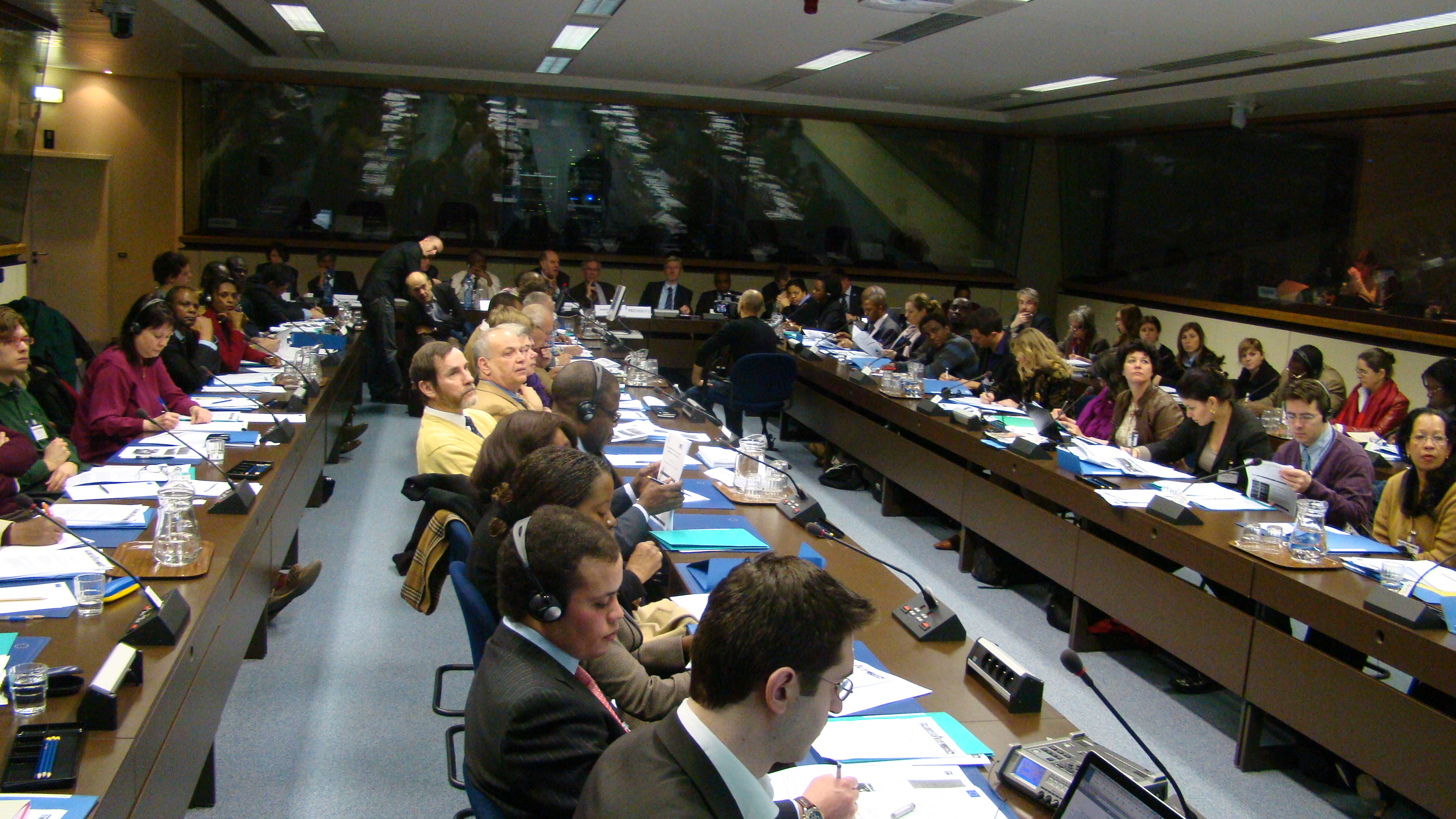
Over a thousand agricultural experts from around the world, who had gathered in Delhi for the fourth congress on conservation agriculture, deliberated an issue that is vital for sustaining high-growth agriculture without clashing with the environment.

Of late, modern agriculture has come in for considerable flak for causing possibly irretrievable damage to the earth's natural resources, notably soil and water, and for vitiating the environment through harmful greenhouse gas (GHG) emissions. Conservation agriculture, involving some novel farm practices, is said to be an antidote for most of the ill-effects of intensive farming. For, it aims to not only reduce the damage to natural resources and the environment but actually reverse it. The resource conservation practices conceived for this include minimum or zero tillage, letting crop residues get back into the soil instead of burning them, immaculate land leveling to ensure the even spread of water, and applying only need-based fertiliser and water to crops.

The benefits of such practices are many, and somewhat obvious. They protect soil health to enhance its fertility, prevent the environmental pollution caused by burning of crop residues, save on the labour and energy required for repeated land tilling, and reduce the use of water in agriculture, sparing it for other purposes. The biggest advantage is that by letting biological residues get back into the soil, it transforms agriculture from a carbon emitter to a virtual carbon sequester by converting crop land into a carbon sink.
Reference:
Business Standard / New Delhi February 9, 2009 Now, conservation farming
The fourth World Congress on Conservation Agriculture was hosted by the Indian Council of Agricultural Research and the National Academy of Agricultural Sciences and sponsored, among others, by FAO and the International Fund for Agricultural Development. [FAO Press Release] [FAO Website on CA] [Congress Website]

Saturday, 31 January 2009

The Diversification Challenge in Africa's Resource-Rich Economies

For a growing number of countries in Africa the current commodity boom is a huge opportunity. But if the economic history of resource-rich, poor countries—especially in Africa—is any guide, rather than bringing prosperity, the resource boom may drive them into what Paul Collier (2007) in his influential book The Bottom Billion terms the “Natural Resources Trap.”

In Africa, countries dependent on oil, gas, and mining have tended to have weaker long-run growth, higher rates of poverty, and higher inequality than non mineral-dependent economies at similar levels of income. Two recent studies suggest both the potential and the risks of resource extraction. Reference: Brookings 31/01/09